Seville Cathedral
- When
- Stops1
- Photos8
Where this post goes
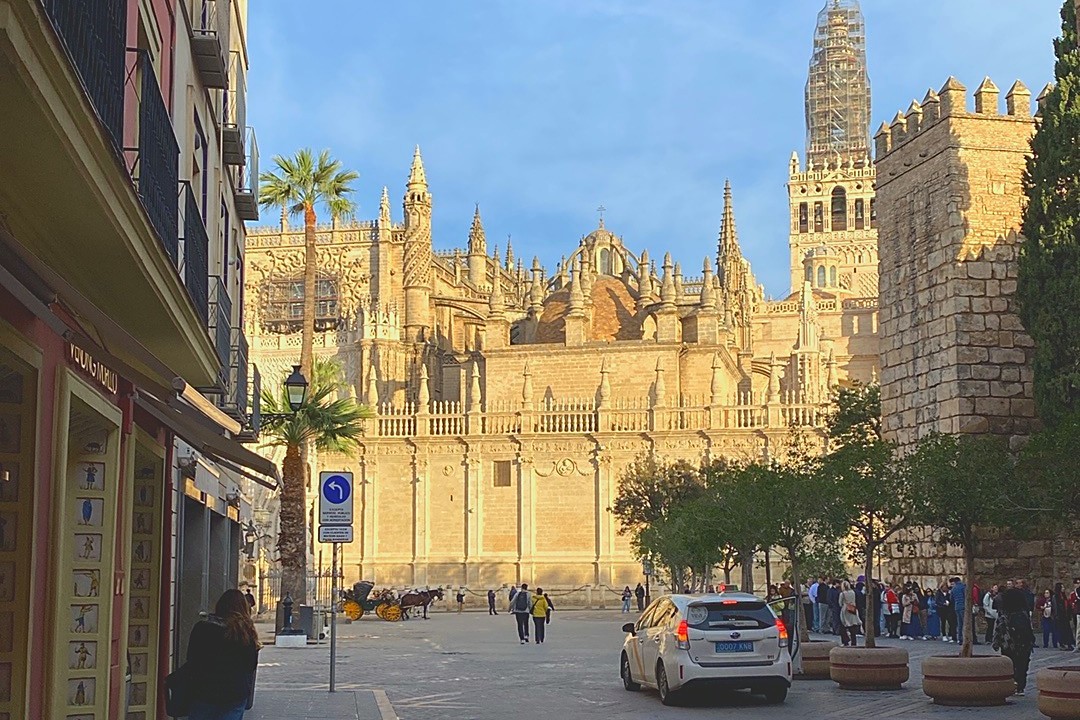
Seville Cathedral is next to the Real Alcázar, and I went the same day.
It is the largest Gothic cathedral in the world. It was built between 1401 and 1506 on the site of the city's main mosque, which the Almohads had built in the twelfth century. After the Christian conquest of Seville in 1248 the mosque was used as a church until the new cathedral replaced it. Two parts of the mosque were kept: the minaret, now the Giralda bell tower, and the courtyard of orange trees by the entrance.
The cathedral, the Alcázar and the Archivo de Indias between them are a UNESCO World Heritage Site.
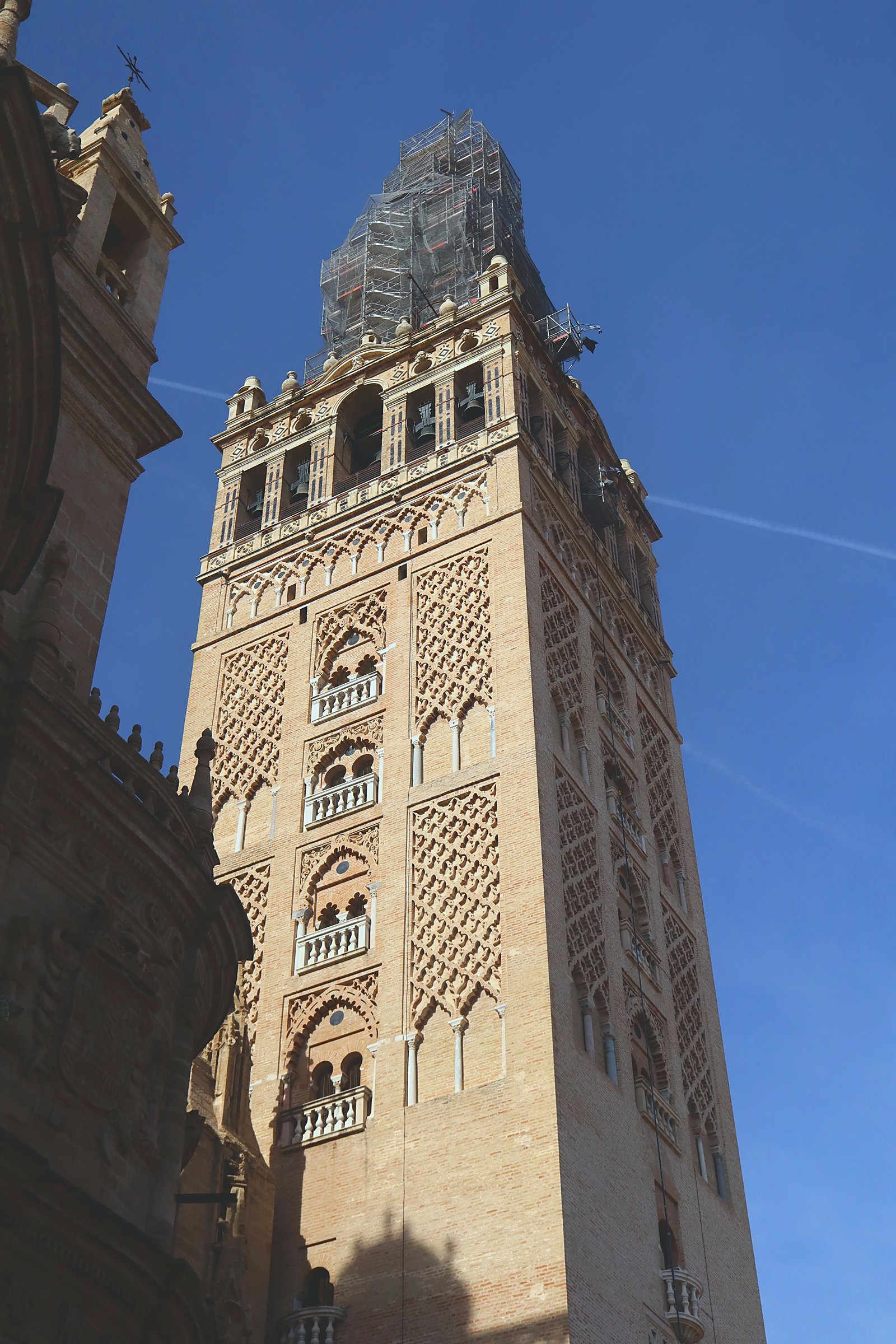
The Giralda was built as the mosque's minaret in the late twelfth century. The bell chamber and the upper stages were added in the sixteenth century. Inside, the way up is a series of ramps rather than stairs, wide enough for a person on horseback.
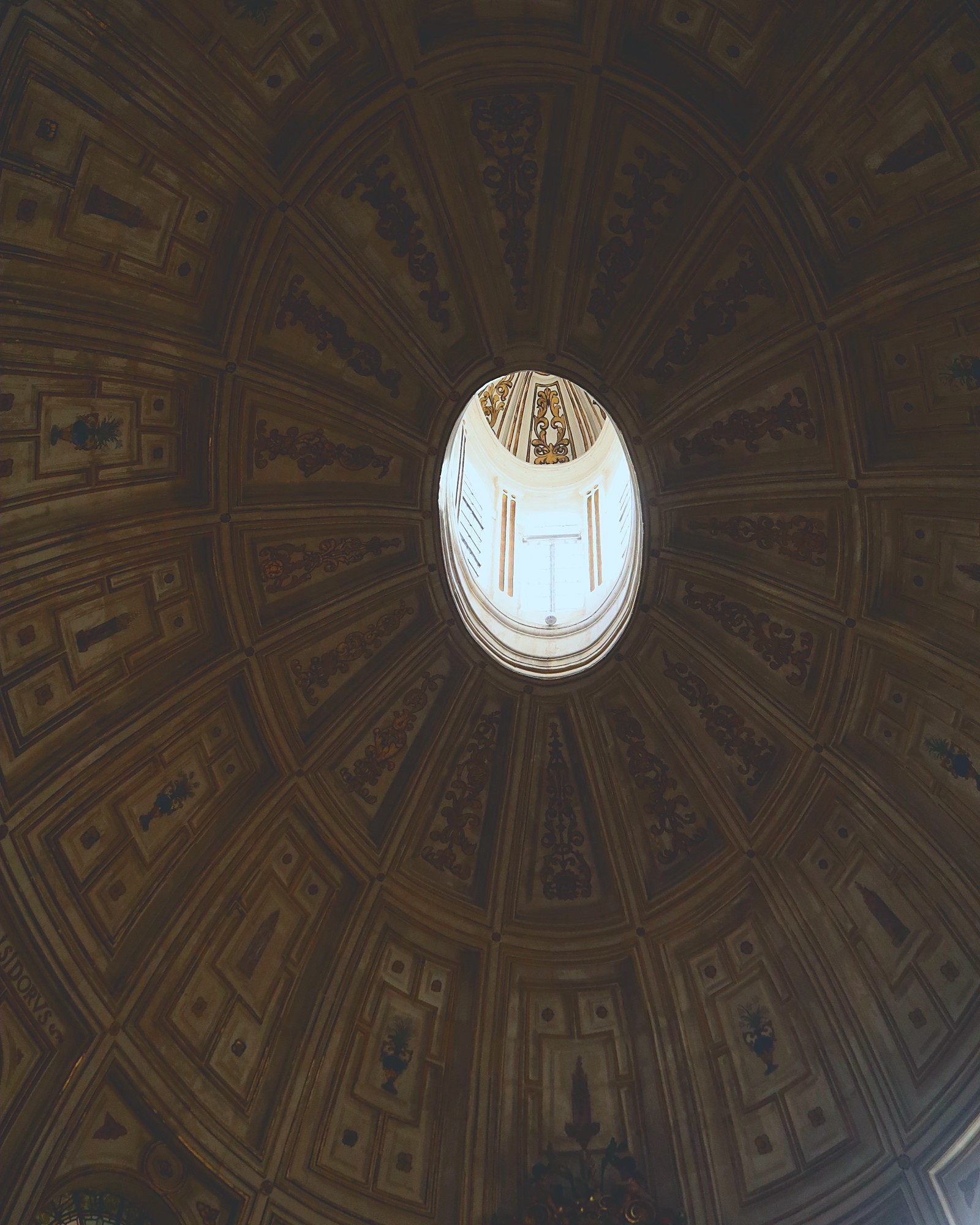
Inside, the scale is hard to photograph. The columns are enormous and the vaults are very high, and the choir sits in the middle of the nave as a building of its own.
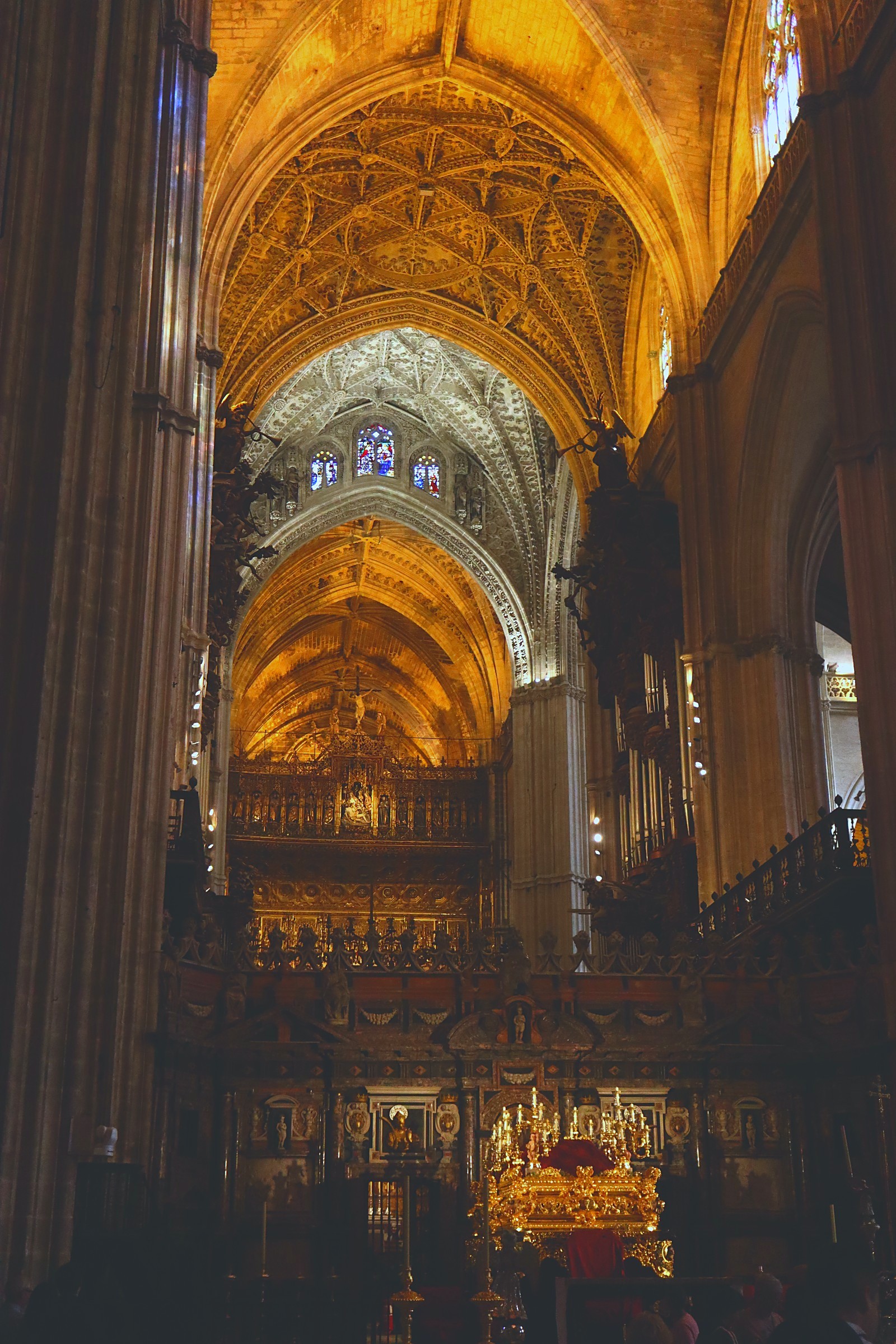
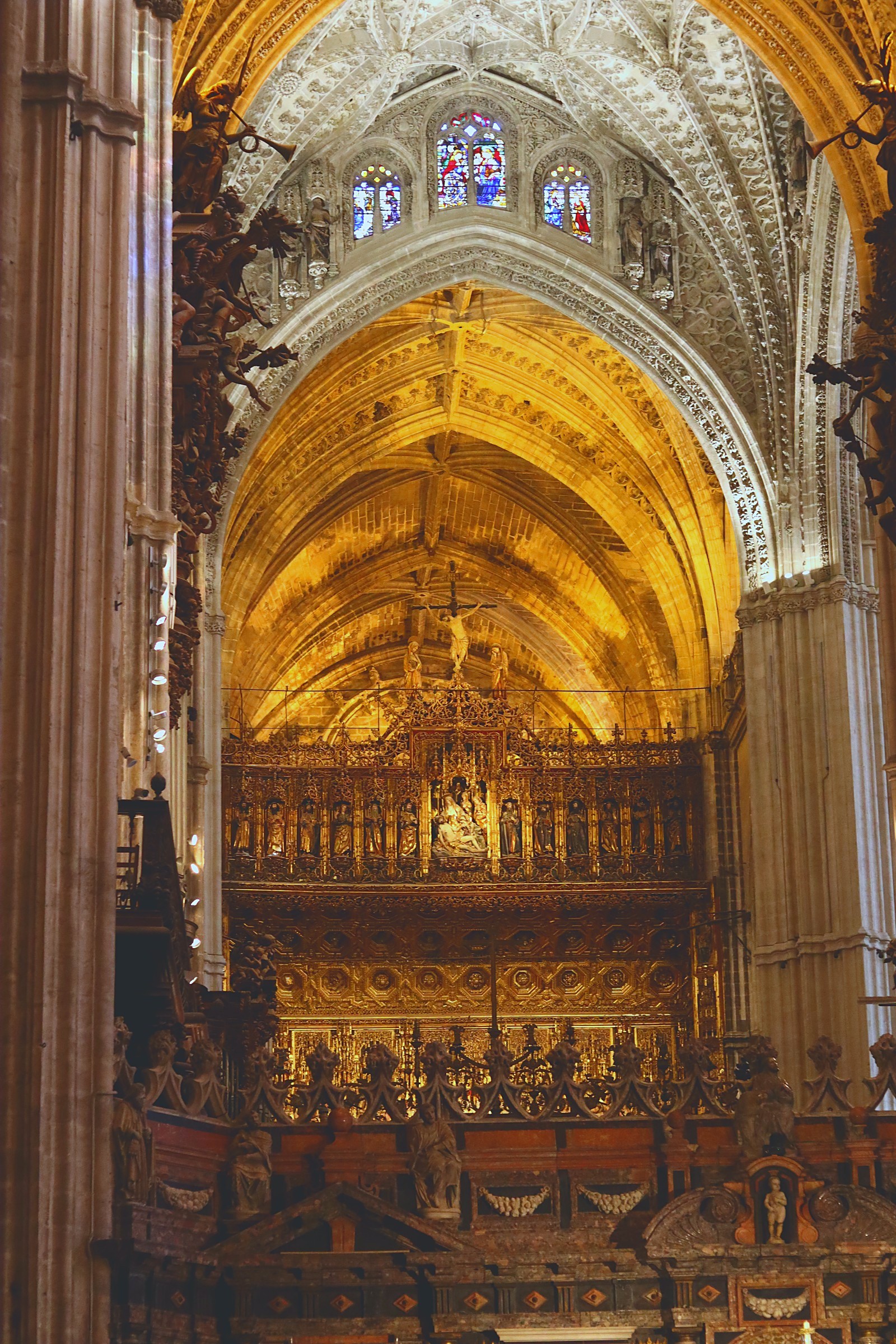
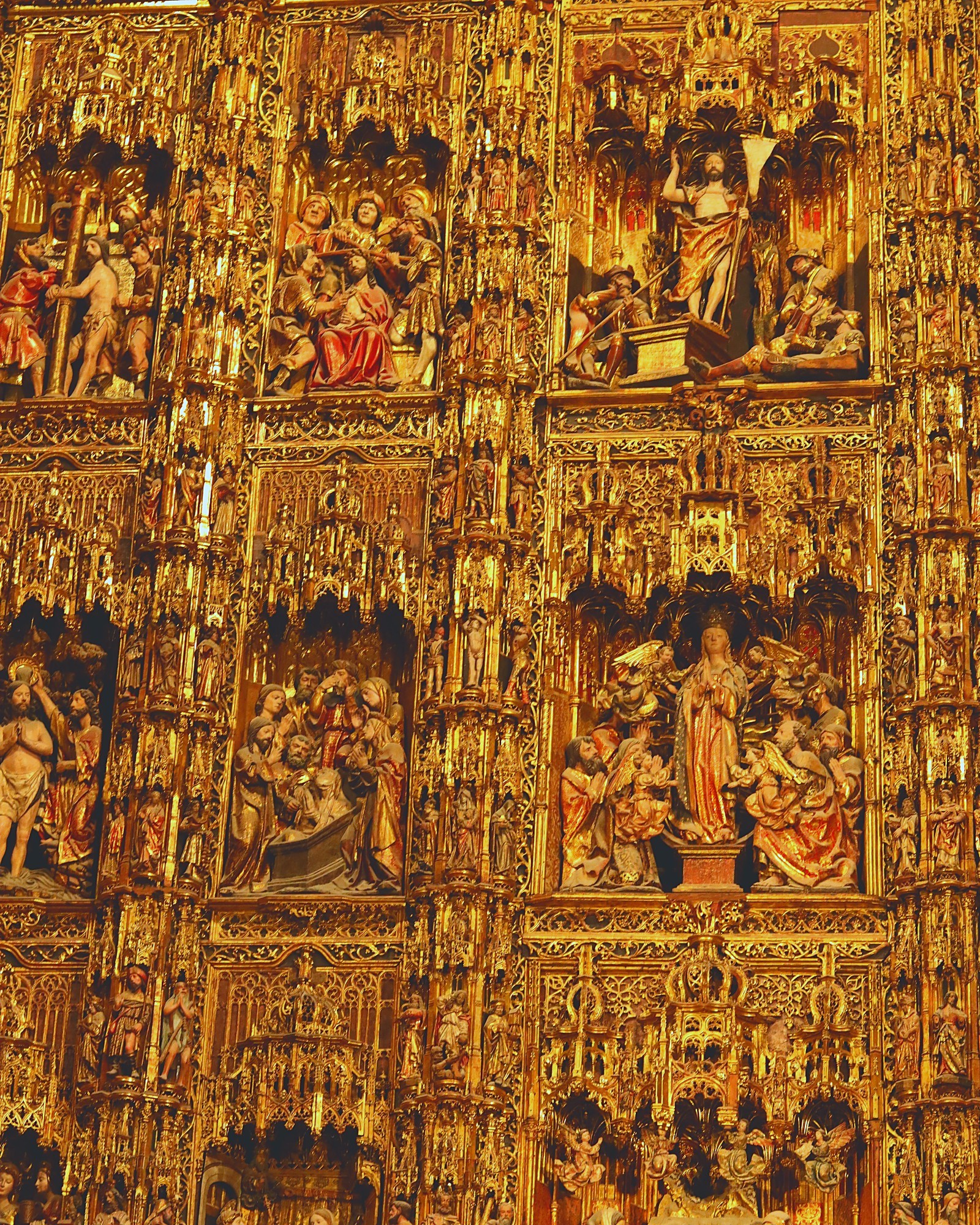
The Retablo Mayor, behind the main altar, is a wall of gilded wood carved into scenes from the Bible. It was begun in 1482 by the Flemish sculptor Pierre Dancart and took more than eighty years to finish. It is one of the largest altarpieces in the world.
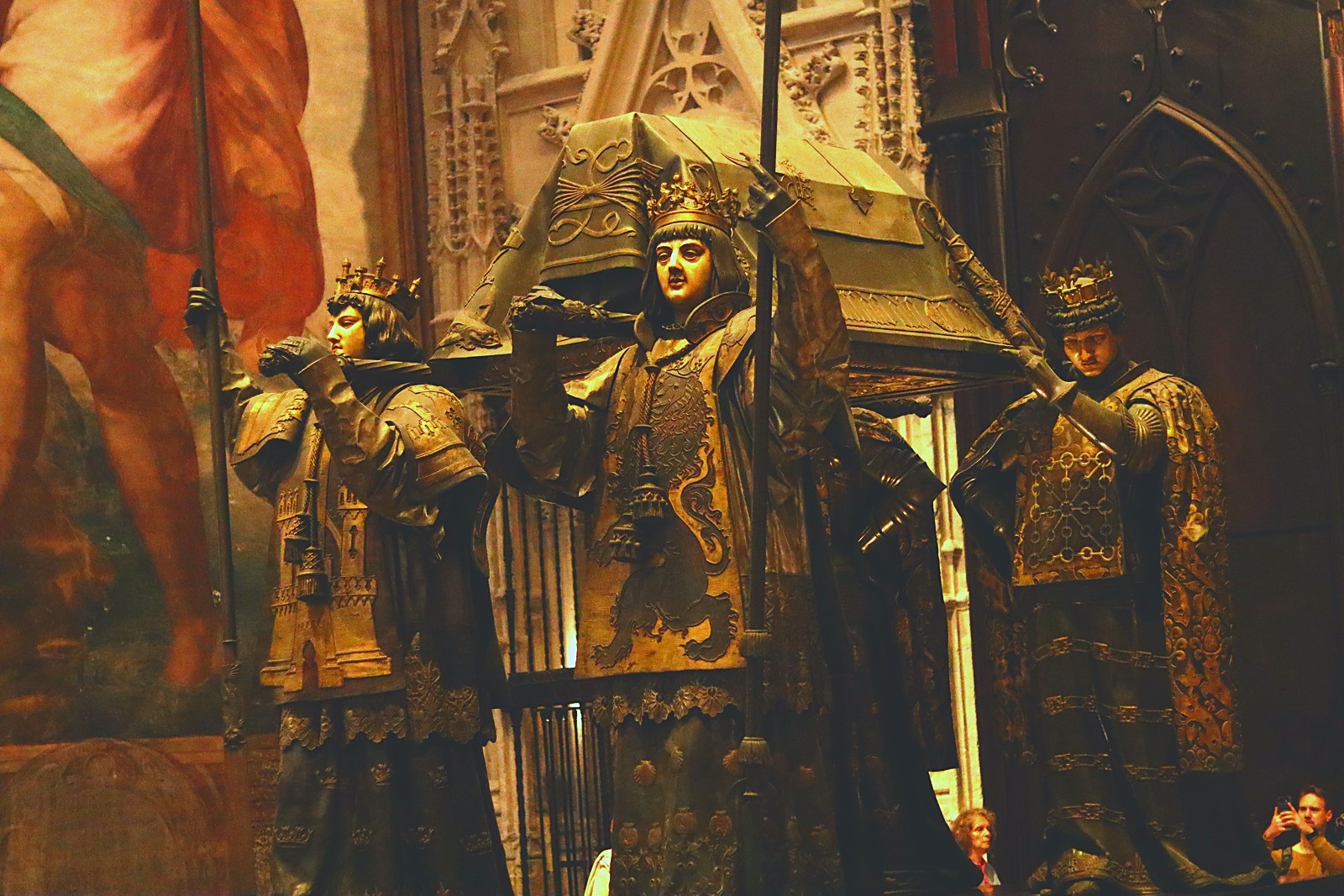
The tomb of Christopher Columbus is carried by four heralds representing the kingdoms of Castile, León, Aragón and Navarre. His remains were moved several times after his death in 1506, and came to Seville from Havana in 1898, when Spain lost Cuba. DNA tests in the 2000s showed that at least some of the remains here are his.
Tickets are timed and the cathedral and tower are one ticket. Allow a couple of hours, more if you climb the Giralda.
What it cost
Prices for one person.
Tickets and entry
- Seville Cathedral and the Giralda, general entrythe same ticket also gets you into the Church of El Salvador €14 per person≈ NZ$28
NZ$ figures are approximate, at the European Central Bank reference rates of 23 November 2026. Every post's costs →